Sainik School reservation is the single most underused piece of information in the admission process. Parents obsess over the score and ignore the structure — yet the structure decides which score is enough.
Two children with identical marks can have completely different outcomes depending on state, category and quota. Here is how the seats are actually divided.
Rule 1 — The 67% Home-State Split
Before any category reservation applies, seats are divided by state:
- 67% to home-state candidates
- 33% to candidates from other states and union territories
This is the most consequential rule in the system. For a Tamil Nadu family, Sainik School Amaravathinagar is the home-state school — and roughly 77 of its 116 Class VI seats are reserved for Tamil Nadu children. The rest of India competes for 39.
Rule 2 — Category Reservation Inside Each Quota
Within the home-state and other-state pools, the standard reservations apply:
| Category | Share |
|---|---|
| SC | 15% |
| ST | 7.5% |
| OBC (Non-Creamy Layer) | 27% |
| Wards of defence personnel and ex-servicemen | 25% of the remaining seats |
The defence quota is worth reading carefully: it is 25% of the seats that remain after SC, ST and OBC-NCL are set aside, for wards of serving personnel of the Army, Navy and Air Force, and of ex-servicemen.
This is why the certificate format matters so much. A defence-ward claim that is not attested by the prescribed authority collapses, and the child is moved into the general pool where the cut-off is highest. Our document checklist sets out exactly what each certificate must look like.
Rule 3 — Girls' Seats
In Class VI, each Sainik School reserves 10% of total vacancies or 10 seats, whichever is higher, for girls. At Amaravathinagar that has meant around 12 of 116 Class VI seats in recent cycles.
For Class IX there is no fixed girls' percentage prescribed in the same way, which means girls aiming at Sainik School should plan for the Class VI window. More detail in our guide to girls' admission.
Rule 4 — The Detail Most Parents Miss
If a candidate from a reserved category reaches the general merit list on their own score, they are admitted against a general seat — and their reserved-category seat stays available for the next candidate in that category.
This has a real consequence: a high-scoring reserved-category child does not "use up" a reserved seat. It also means the effective competition inside a reserved category is often for the seats below the top performers, which is why previous years' category cut-offs vary as much as they do.
What This Looks Like in Practice
Recent approximate Class VI cut-offs at Amaravathinagar, out of 300:
| Category | Approximate cut-off |
|---|---|
| General | 235 – 255 |
| OBC | ~240 |
| Defence ward | ~236 |
| SC | ~189 |
| ST | ~134 |
Indicative only — cut-offs move every year with applicants, paper difficulty and the seat matrix. The full discussion is in our cut-off marks analysis.
Whatever your category, aim well above your cut-off, not at it. We target 270 of 300 for general-category students precisely so that a hard paper does not end the attempt.
Claiming a Quota: The Practical Checklist
- Certificate is in the child's name, not a parent's
- It is in the prescribed format from the competent authority
- For OBC-NCL, the non-creamy-layer status is current and does not expire before verification
- Defence claims carry the correct attestation
- Home-state claim is supported by consistent residence proof
- Every claim on the form can be proved with an original at verification
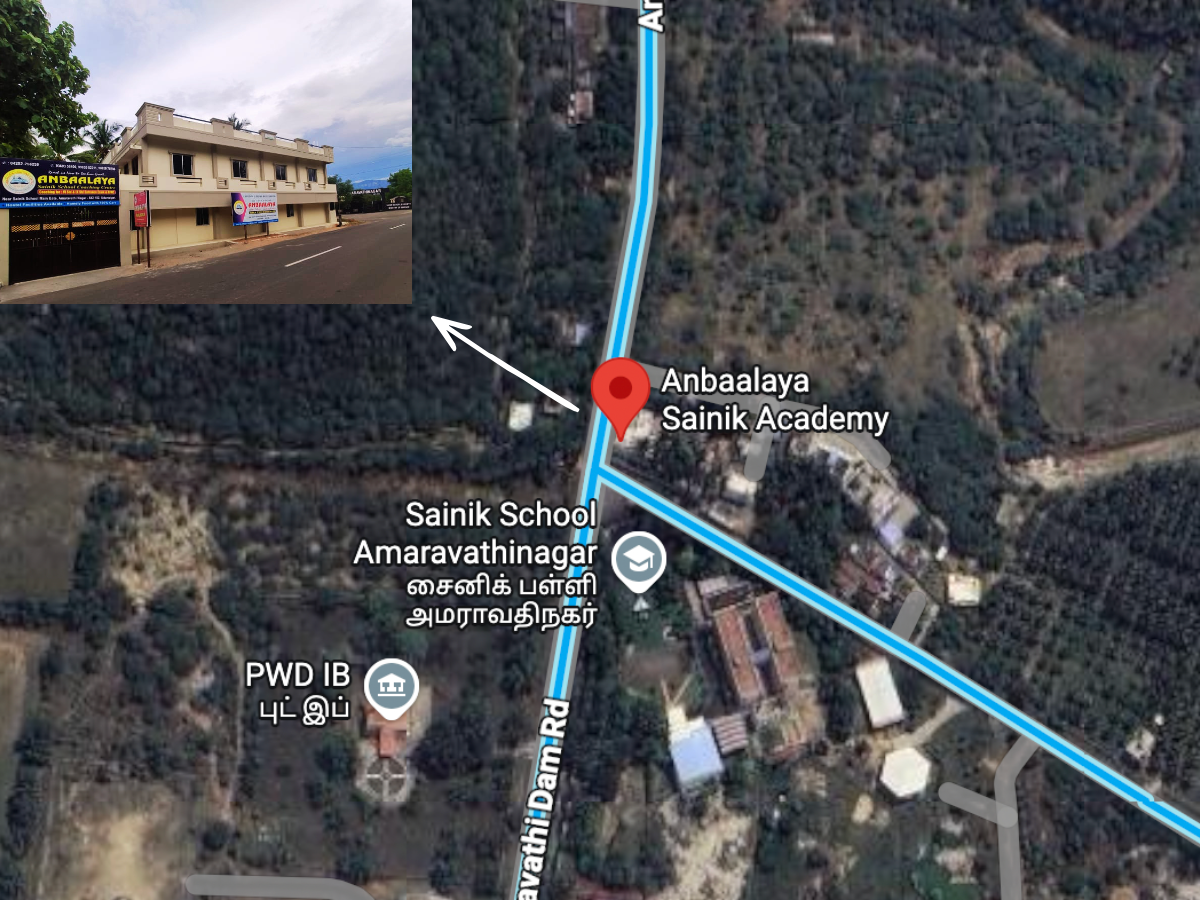
A hard truth. Reservation helps only if the paperwork survives scrutiny. Every cycle we see families lose a seat not because the claim was false, but because the certificate was in the wrong format, in the wrong name, or expired. Bring the file to our office at Amaravathinagar, or call 9965502211, and we will check it.
What Reservation Does Not Do
- It does not change the age criteria. The window is identical for every category
- It does not lower the qualifying minimums in each subject
- It does not exempt anyone from the medical examination or document verification
- It does not create seats. It divides the existing ones
For how the divided seats are then allotted, see our e-counselling walkthrough.
Keep reading
Frequently Asked Questions
What is the home-state quota in Sainik School admission?
67% of seats in each Sainik School are reserved for candidates from the state where the school is located, and 33% for candidates from other states and union territories. For Tamil Nadu families this makes Sainik School Amaravathinagar the strongest target.
What are the reservation percentages for SC, ST and OBC in Sainik School?
Within each state quota, 15% of seats go to SC candidates, 7.5% to ST, and 27% to OBC non-creamy-layer candidates, with 25% of the remaining seats reserved for wards of defence personnel and ex-servicemen.
How many seats are reserved for girls in Sainik School?
In Class VI, each school reserves 10% of total vacancies or 10 seats, whichever is higher, for girls. There is no fixed girls' percentage prescribed for Class IX in the same way.
Does a reserved category student who scores in the general merit list lose their quota seat?
No. They are admitted against a general seat and the reserved seat remains available for the next candidate in that category.
Is there age relaxation for reserved categories in AISSEE?
No. Reservation applies to seats only. The age window is the same for every category and is verified from the birth certificate with no relaxation.
What happens if my category certificate is in the wrong format?
The claim is rejected at verification and the candidate is considered against general seats, where cut-offs are higher. Certificates must be in the child's name, in the prescribed format, and issued by the competent authority.